Soil fertility in Northern Benin: from productivist cotton farming to traditional agroecology
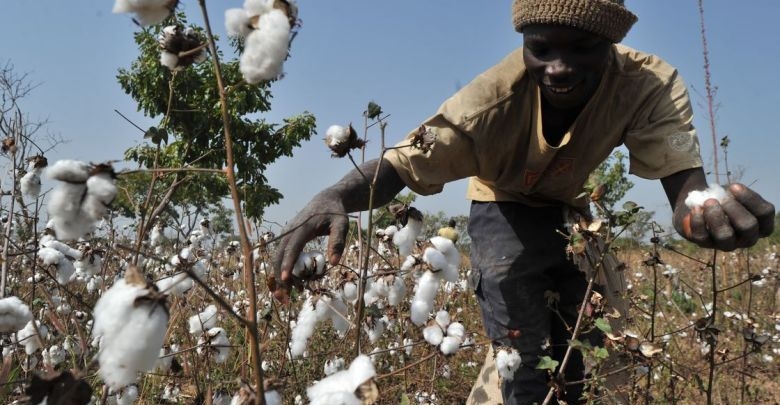
The agricultural sector is a pillar of the Beninese economy, generating 70 % of employment and 23 % of GDP. However, economic and political crises have revived concerns about food sovereignty as domestic demand increases and agricultural land becomes scarce. At the same time, rapid exhaustion Forest resources, biodiversity, and water resources underscore the need to effectively restore soil fertility to achieve food security goals. In partnership with the French Development Agency, Noémie Bollecker, an intern at the FARM Foundation, conducted a study in the cotton-growing region of northern Benin, assessing soil fertility and providing recommendations to support farmers in sustainable land management.
The foundations of soil fertility renewal in Benin
Before the profound agrarian transformations implemented during colonization, the fertility of the soils in northern Benin relied on a combination of traditional agricultural practices, which allowed for their efficient and sustainable renewal. A mosaic of fields cultivated with intercropping systems could then be observed, some along riverbanks, others left fallow for extended periods, and still others as communal pastures. Slash-and-burn agriculture, which involves clearing temporary fields in forests by cutting and burning the natural vegetation, planting crops for a short period, and then allowing these fields to revert to the forest, was one of the widely used practices for renewing soil fertility.
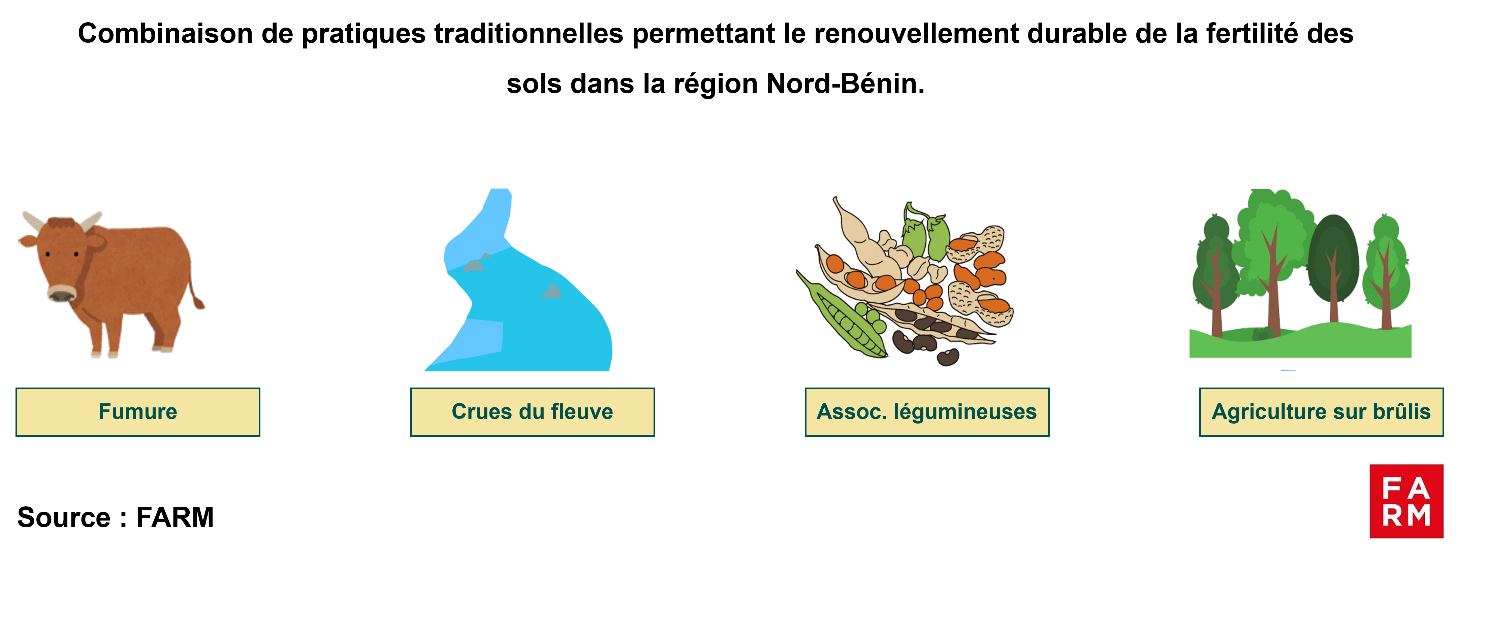
The diversity of crops in the production system (sorghum, millet, cowpea, yam) ensured food security while maintaining a balance in nutrient uptake from the soil. Thanks to the return of crop residues[1] Some of the organic matter and chemical elements were returned to the soil. Plots located along the river benefited from regular deposits of fertile alluvium, contributing to the natural renewal of soil fertility. Long fallow periods, sometimes lasting up to 30 years, allowed to restore the chemical and biological fertility of the soils, in a system based on the’balance between periods of cultivation and soil rest, characterized by a low population density. Soil fertility was also supported by a strong complementarity between agriculture and livestock farming: livestock fertilized the cultivated land via grazing contracts between farmers and livestock breeders.
This combination of agricultural practices, specific to the pre-colonial context, ensured a sustainable renewal of the chemical, physical, and biological components of soil fertility. However, several major upheavals would weaken this previously stable balance.
The drivers of soil fertility degradation
Four main factors have transformed agricultural systems in Benin, leading to major consequences for soils and their fertility.
- Agricultural trajectories locked in by the development of cotton cultivation
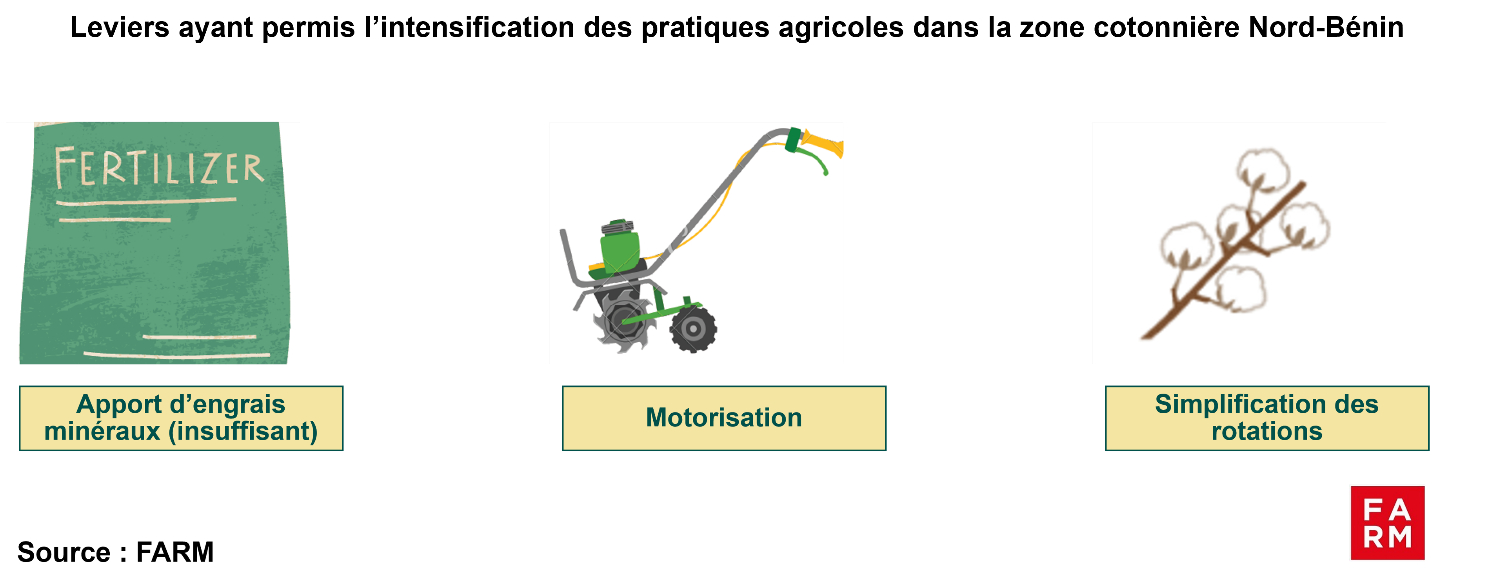
The introduction of cotton cultivation in the 19th century by European settlers profoundly altered traditional agricultural systems. Under the pressure of the poll tax, a tax levied by the French colonial state and applied uniformly to every individual regardless of income, and through incentive policies aimed at developing export crops, peasants were forced to to expand their cultivated areas, at the expense of fallow periods. The cotton sector, structured around an export-oriented approach, thus became a major driver of the national economy. This orientation led, after Benin's independence, an intensification of agricultural practices, centered on cotton production. This shift has occurred at the expense of other crops and their rotation, with lasting effects on land-use dynamics and agroecological balances. It has led to the overexploitation of soil resources, reducing fallow periods. This move towards intensive agriculture has disrupted the natural balance between the return and removal of mineral elements and organic matter from the soil. It has also come at the expense of traditional crop rotations. This intensification has been made technically possible by mineral fertilizers, simplified farming practices, and small-scale mechanization.
- Economic constraints that weigh on producers
However, economic crises, structural reforms, and climate shocks have destabilized the country's agricultural model: droughts in the 1970s, structural adjustment policies imposed by international financial institutions promoting market liberalization[2], debt crisis, devaluation of the CFA franc, then, later, the the 2008 economic crisis, the COVID-19 pandemic, and the Russo-Ukrainian war. These events have severely disrupted the Beninese economy, reducing support for the agricultural sector. Recent events have, for example, led to a rise in fertilizer prices and unequal availability depending on farm income.. Even today, these constraints limit the ability of producers to maintain soil fertility through a sufficient supply of mineral elements.
- Population growth and pressure on resources
The population of northern Benin has experienced significant growth, increasing fivefold between 1960 and 2008, disrupting traditional agricultural production systems, particularly the fallow cycle. This population growth has resulted in a reduction of available agricultural land per capita. Faced with this land pressure, farmers are forced to extend the cultivation period, thus significantly reducing fallow time, while simultaneously expanding cultivated land at the expense of forest resources. Consequently, the functions historically provided by fallow land and forest areas, such as soil fertility management, biodiversity conservation, and timber production, are no longer fulfilled. These deficiencies lead to a progressive depletion of soils, a decline in agricultural yields and an intensification of erosion phenomena, threatening the sustainability of local agricultural systems.
- Intercommunal conflicts
The expansion of cultivated land has, in some areas, come at the expense of grazing lands and transhumance corridors, causing significant conflicts between farmers and herders. This dynamic has led to a sharp decrease in grazing contracts.1, which nevertheless constituted an essential source of organic matter for soil fertilization.
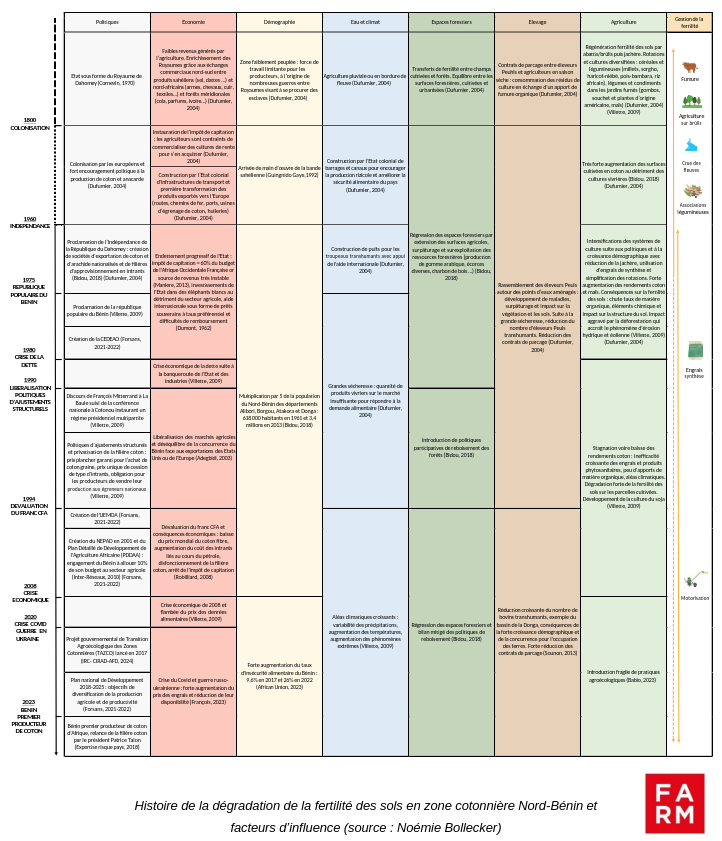
These changes have led to a progressive decline in soil fertility in the cotton-growing region of northern Benin. This decline and the various factors that have contributed to it are summarized in the chrono-systemic timeline below.
The low rate of soil fertility renewal, along with other factors such as climate change and the simplification of farming practices, is an aggravating element in overall soil degradation. The combined effect of these phenomena increases soil vulnerability to various forms of erosion (wind and water) and thus contributes to accelerating the desertification process.
How will soil degradation manifest itself in 2025?
- Capping of yields
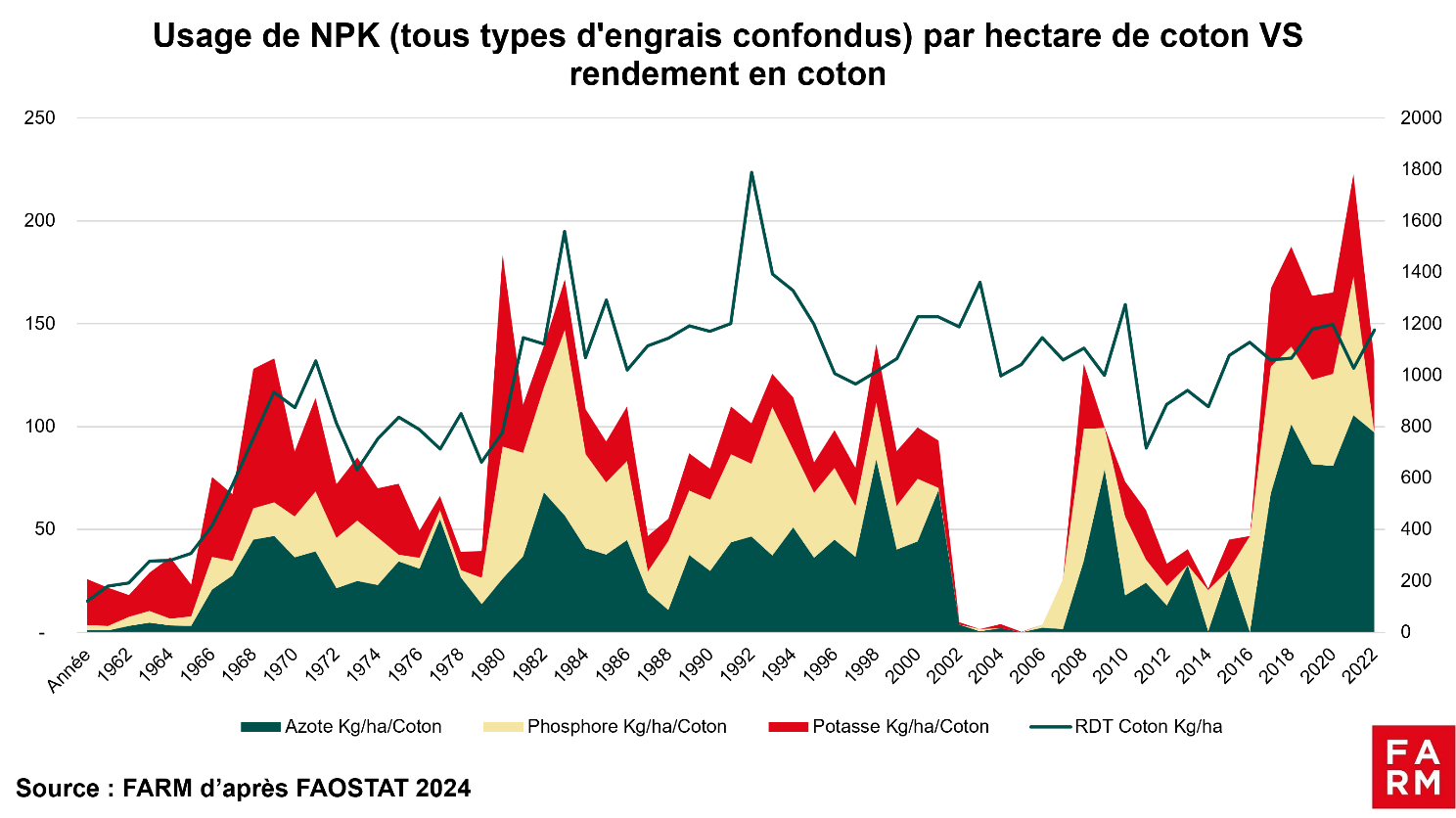
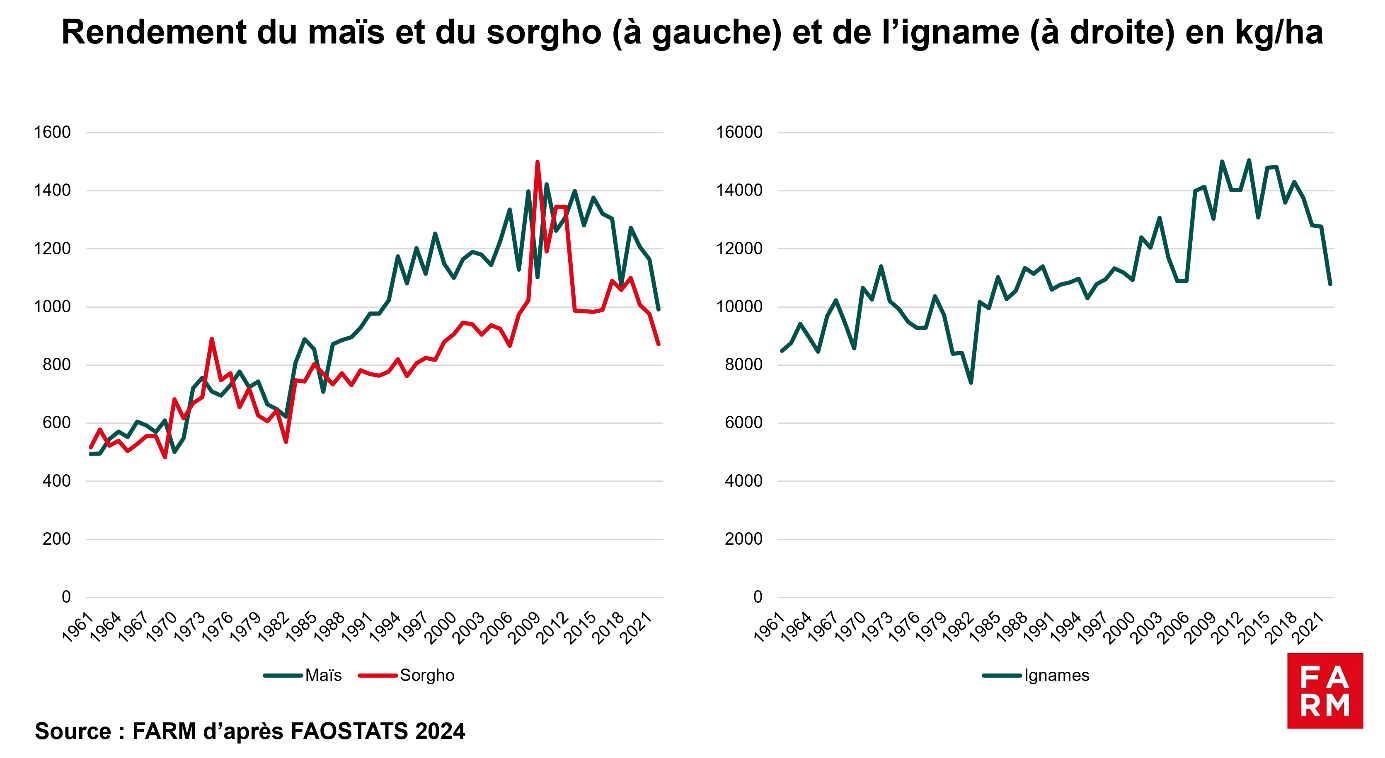
The degradation of soil fertility in northern Benin is now widely documented and recognized as a major obstacle to the development of productive and sustainable agriculture. It is characterized by a progressive depletion of organic matter, in mineral elements and increased erosion, which is exacerbated by climate change. This manifests itself in the capping of agricultural yields particularly in cotton-growing areas over the last two decades (figure below).
- Ineffectiveness of mineral fertilizers
Paradoxically, the plateauing of cotton yields is accompanied by an intensification of the use of NPK (nitrogen, phosphorus, potassium) mineral fertilizers, applied almost exclusively to cotton plots between 2017 and 2022. (94 % over the 2019-2020 campaign), often at the expense of food crops such as maize, yams, or sorghum. These crops benefit sporadically from leftover fertilizers not used on cotton and experience a similar trend of yield plateauing.
Since 2017, a marked decoupling has been observed between the evolution of cotton yields and the increase in the use of mineral fertilizers. This decreasing efficiency This can be explained by the physical, chemical and biological degradation of soils, exacerbated by the reduction in the return of organic matter and the simplification of crop rotations..
- Deterioration of nutrient balances
Finally, the state of soil degradation is also manifested by mineral balances (nutrient inputs/outputs) are deteriorating (see figure below). Exports of biomass and mineral elements from the soil are not compensated by sufficient NPK inputs. This manifests as the progressive depletion of mineral elements from the soil.
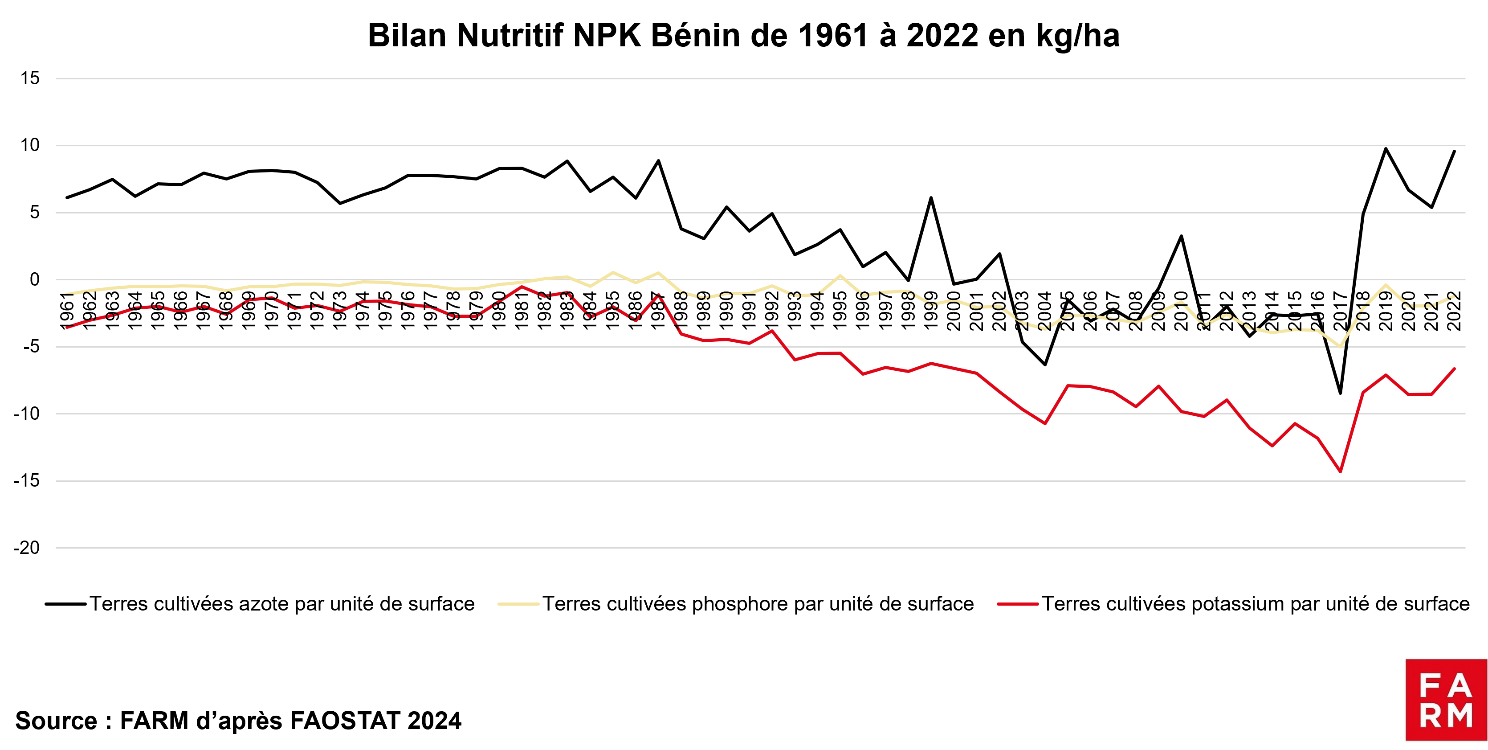
Despite an apparent effort to replenish mineral nutrient stocks since 2017, evident in nutrient balance analyses and increased mineral fertilizer inputs, yields are stagnating or declining, suggesting an advanced state of soil degradation. A deficit in organic matter, limiting nutrient retention and utilization by the soil, is likely the root cause of this situation. This imbalance between mineral and organic inputs poses a major obstacle to fertilization efficiency and the sustainability of production systems. Given these findings, restoring soil fertility appears to be a priority for addressing these problems. Several initiatives have emerged in recent years to meet this challenge. These actions aim to restore depleted soils through more sustainable agricultural practices, improved use of organic resources, and enhanced support for producers.
Restoring fertility: promising initiatives in the face of structural challenges
In response to these observations, several local, national, and international initiatives have emerged in Benin. Among them:
- The Tazco project (Agroecological Transition in Cotton-Growing Areas), funded by the French Development Agency (AFD) since 2017, promotes the democratization of agricultural practices that restore and improve soil fertility on cotton farms in Benin. Examples include compost production, returning crop residues to the soil, and diversifying crop rotations.
- THE Pro-Sol project (Promotion and dissemination of soil protection and rehabilitation techniques) in Benin), funded by the German Agency for International Cooperation (GIZ) since 2014. It promotes The dissemination of innovative techniques for integrated soil fertility management. For example, legume associations in crop rotations, the use of organic matter and super-urea granulated.
- Public initiatives such as those developed bythe national company SoNaMA(National Agricultural Mechanization Company). It offers a range of agricultural mechanization products, subsidized at 50% by the Beninese government.
- Private initiatives around access to local organic fertilizers based on agricultural resources and by-products of agricultural operations.
The practices promoted by previous initiatives are compiled in the following figure along with the associated adoption rates by farmers.
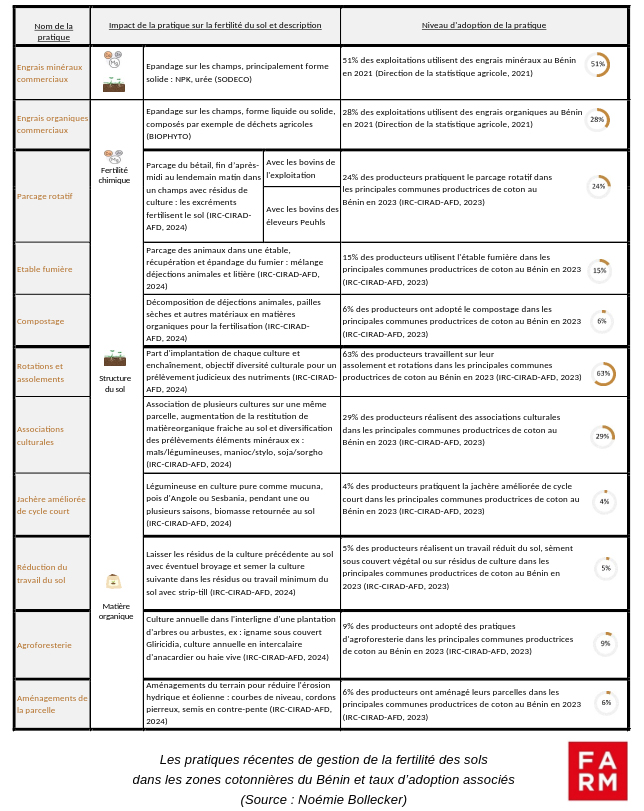
However, the adoption rate of practices that promote soil fertility renewal remains generally low. Only certain practices, such as the use of mineral and organic fertilizers, show relatively high adoption levels, at 51% and 28% respectively. Conversely, other essential practices, such as composting (6%), the establishment of improved fallow land (4%), and agroforestry (9%), are significantly less widely adopted. This low adoption rate is mainly due to the existence of significant structural barriers:
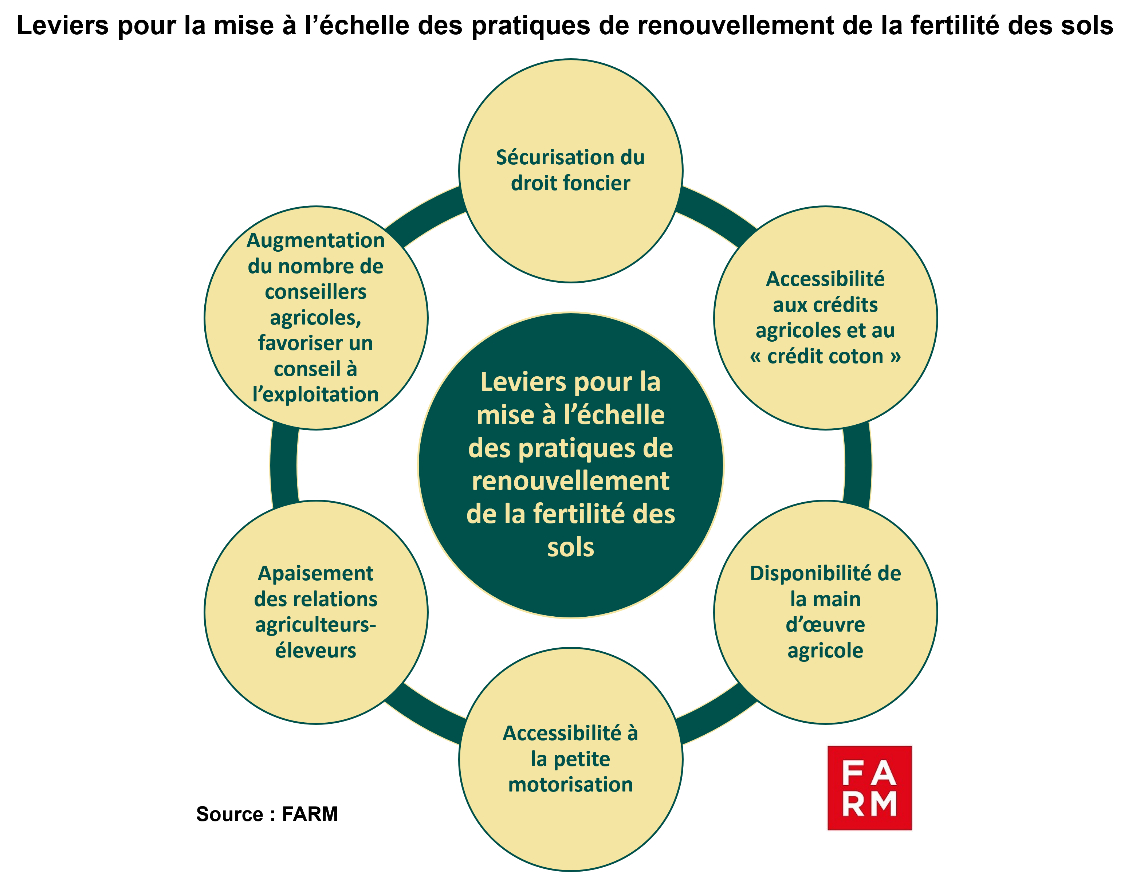
- A difficult securing land rights, which limits long-term investments in production systems (such as agroforestry) and does not promote the integration of long-term fallows into rotations.
- A restricted access to credit from private financiers due to the lack of land titles. This loan allows the purchase of small agricultural equipment essential for carrying out certain tasks and reducing the arduousness of the work.
- Difficult access to fertilizer credit for small farmers not growing cotton. In the communes of Kandi and Banikoara, for example, 39.6% of producers indicate that the acquisition of inputs is a major constraint for agricultural production, and 43% of producers obtain their supplies on the black market..
- A low mechanization, while only 6 % producers use machinery agricultural. Hence the creation of SoNaMA in 2019, which aims to implement the national policy for the development of agricultural mechanization (PNDMA).
- A scarcity of agricultural workforce due to the rural exodus, with a rapidly declining rural population, decreasing from 91 % in 1960 to 49 % in 2024.
- Of the farmer-livestock relations are deteriorating rapidly., This reduces the possibilities for cooperation through rotational grazing and therefore the supply of organic matter to the fields.
- A producers have low technical training, with only 2.4 % of farm managers who have received professional agricultural training and one Weak and segmented agricultural advice, focused on the cotton sector, insufficient for a systemic transition.
Towards a new pact between soils, farmers and public policies
The progressive degradation of soil fertility in northern Benin, linked to agricultural intensification, the reduction of fallow land, and the disruption of traditional agro-ecological balances, calls for a profound transformation of production systems. Restoring fertility cannot be limited to increasing mineral inputs: it requires an integrated approach, combining local knowledge, technical innovations, and sustainable resource management.
Projects like TAZCO and ProSol demonstrate that it is possible to promote more resilient practices based on organo-mineral fertilization, crop rotation diversification, and improved use of organic matter. However, their dissemination remains hampered by structural obstacles such as limited access to credit, land insecurity, and a lack of training.
The major challenge, therefore, is to support a systemic transition towards sustainable agriculture, capable of restoring the biological, organic, and chemical balance of the soil, while maintaining yields that allow producers to generate sufficient income and meet growing food needs. This approach requires collaboration between producers, public policymakers, and research stakeholders.
[1] Dufumier, M. (2004). Agriculture and peasantry in the Third World. Karthala. https://doi.org/10.3917/kart.dufu.2004.01.
[2] Adegbidi, A., Dedehouanou, H., Kpenavoun, S., & Lutz, C. (2003). Ten Years of Maize Market Liberalisation in Benin. University of Groningen.