Rethinking crop protection: acting collectively for life
The 15thth The FARM Foundation's international conference, held on February 17, 2026 at the Cité Internationale Universitaire de Paris, created an essential space for dialogue in a deeply polarized global agricultural context.
The central message is clear: crop protection is entering a necessary and profound transformation, no longer able to rely solely on the use of synthetic pesticides. It must be part of a systemic and collective approach. Far from being a simple technical substitution, it requires a genuine redesign of agroecosystems, where technological innovation is combined with practical, on-the-ground knowledge.
The conference also emphasizes that the risk of this transition should not fall solely on farmers but requires shared responsibility across all value chains and sectors, as well as public policies and consumers.
The day's discussions revealed three key lessons that go beyond a simple report and shed light on the fundamental issues:
- A system in transition but locked down. Alternatives exist, but economic models, standards, interests, and institutional tools make transformation difficult and costly.
- Conditions for success clearly identified. They all agree on the need for genuinely shared responsibility, technical and social innovations, and massive support to secure producers.
- Political and economic levers that are still inconsistent. Public ambitions are strong, but fiscal, regulatory and trade instruments create tensions, even contradictions, which hinder the transition.
The debates also highlighted tensions (between the competitiveness of sectors and the perverse effects of regulations), of contradictions (public policies that both encourage and discourage), and above all a major blind spot Agroecology increases uncertainty and workload, but Risk is not rewarded, which makes the transition structurally unfair.
These findings reinforce the need for the FARM Foundation to continue its role in mediator, producer of evidence and actor of consistency, in order to help build the conditions for an equitable sharing of risk and a truly sustainable transformation of crop protection systems.
A transition that has become unavoidable but is structurally risky.
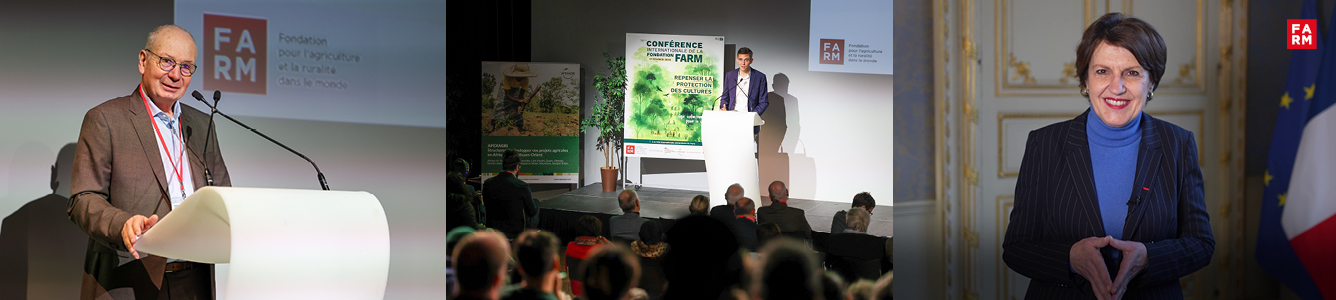
The opening of this conference immediately grounded the debate in both technical and societal dimensions. Pascal Lheureux, president of the FARM Foundation, emphasized the polarization of current positions. According to him, crop protection is at the heart of global debates where «"Distrust of science is growing.". He thus clarifies the ambition of the Foundation of «"To promote exchange and debate in order to facilitate and enhance collective intelligence in order to build the world of tomorrow.". According to Pascal Lheureux, Transforming practices has become an absolute necessity. because current systems are showing their limitations. He pointed out that while pesticides have led to historic productivity gains, «"Today we need to do better and faster. These systems are showing their limitations, sometimes in terms of human, animal and plant health, but also in terms of economic sustainability for farmers and for society."».
Annie Genevard, Minister of Agriculture and Food Sovereignty, echoed the Foundation's president, noting that the challenge is significant. «"Promoting agricultural models that are productive, sustainable, and resilient"» while diseases and pests cause nearly 40,13T of global crop losses. She praised the work of the FARM Foundation and CIRAD, particularly the PRETAG initiative, which documents transitions towards systems with lower pesticide use.
Matthieu Brun, scientific director of the FARM Foundation, provided further insight by emphasizing the interconnectedness of global agriculture. He refutes the idea that sustainable protection is a luxury of developed countries. «"The subject we are dealing with today is not a whim of people from the north who would come to tell the south how to do things.". He also points out that pests know no borders and that global warming is accelerating their expansion towards Europe.
For Matthieu Brun, the demographic equation, particularly in Africa, which will have to feed 2.5 billion inhabitants by 2050, requires intensifying production, but to do so «"Sustainably, that is to say without deforestation, by limiting land-use change, without harming ecosystems and by protecting health"». His intervention sealed the deal. leitmotif of the day: «"There is no sustainable agriculture without crop protection, and there is no sustainable crop protection without collective action.".
Rethinking systems for integrated and territorial protection
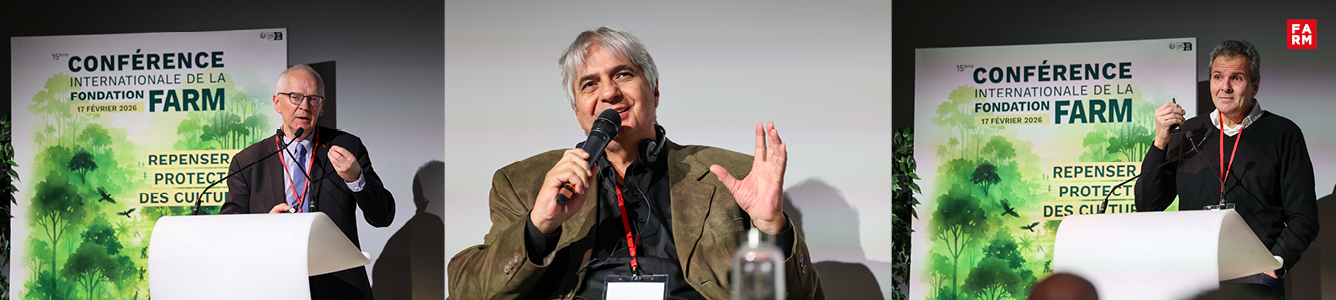
Christian Huyghe, president of the Scientific Council of the FARM Foundation, highlights a central point: the current system is not only technical, it is institutionally entrenched. The transition is not hampered by a lack of alternatives, but by a balance of interests that makes any change costly. He proposes focusing on the active prophylaxis, " "A key to the systems of tomorrow.". This includes, in particular, the diversification of crop rotations.
Christian Huyghe also mentions recent technological breakthroughs such as plant microbiota and genome editing, which will not be enough, however, if systems do not change. He elaborates on the future use of pesticides:« They must be kept, they must be used as a last resort. (…) By using them in this way, their effectiveness is preserved.» emphasizing that the issue is not abolition but the reorganization of their place in agricultural systems.
A central contradiction: agroecology increases uncertainty, but this uncertainty is not compensated.
Décio Karam, a researcher at EMBRAPA in Brazil, illustrates the beginnings of this transition in his country. He describes crop rotation systems and the systematic use of cover crops to eliminate the need for herbicides. These efforts are based on intensive research and adaptation to the rapid cycles of tropical pests. The researcher has noted a major development, " Today, 15 to 20% of the spreading is biological and not chemical.». These transformations are linked to regulatory requirements, with legislation in Brazil now mandating the reduction of pesticides in favor of more sustainable alternative methods. They also stem from the growing awareness among farmers who, as the Brazilian expert says, "« "They are exploring other alternatives since they are also consumers.".
The concrete illustration of these principles was provided by the case of the banana, the most consumed fruit in the world. Éric Avom, coordinator of the National Fruit Crop Development Program in Cameroon, and Sylvain Dépigny, an agronomist at CIRAD specializing in plantain bananas, presented a tool developed in the country: the FABA (Agricultural Training for Plantain Bananas in Africa) educational kit. This kit provides plantain banana producers with access to knowledge on regular leaf removal and organic fertilization to produce without pesticides.
Denis Loeillet, a researcher at CIRAD and a specialist in dessert bananas, complemented this analysis by mentioning the progress made in Colombia and the Caribbean, where pesticide use has been drastically reduced. However, he primarily denounced a major contradiction he calls the «"Hypothesis of the value chain.". According to him, agroecology puts humans back into the fields; it demands more work, attention, and technical expertise. It also increases the uncertainty of the outcome. However, neither this additional workload nor this increased risk is currently compensated. For him, «"There will be no transition without support, without shared responsibility (...) and without a holistic vision of the transformations to be carried out.".
A clear demand: to organize risk sharing
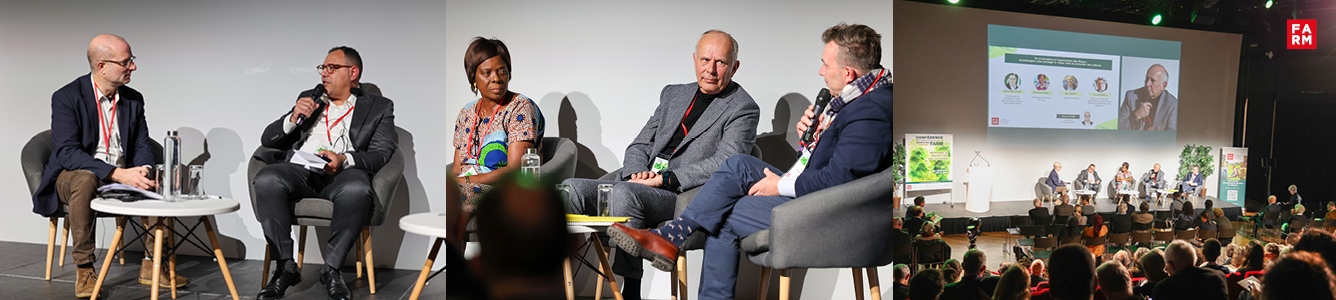
This second session, moderated by Bruno Faure, economics journalist at RFI, showed that producers do not reject change, however they refuse to be the sole financiers and to bear the technical and economic risk alone.
This exchange, entitled: «chow to support and share the risk in crop protection» opens with a presentation of the ECOFFEE consortium, an example of collaboration between competing private actors. Clément Rigal, executive secretary of ECOFFEE, confirms that solutions exist but that «"The barriers are primarily financial and logistical."», while Roger Solano, a coffee grower in Costa Rica and member of the ECOFFEE consortium, advocates for a production «"Sustainable over time and competitive in international markets.".
Bruno Faure examines the levers for this transition «"acts on practices, on the organization of markets and on economic models.".
Health is the primary driver. Véronique Dansou, a trainer of trainers in the Agricultural and Rural Training in Africa (FAR) network, explains that producers, suffering from the effects of pesticides, are looking for local solutions: «"If you speak to their own experiences, they understand quickly.". For the NGO Agronomist and Veterinarian Without Borders (AVSF), Bertrand Mathieu insists on «"the diversity of existing agroecological alternatives", complemented by Mamadou Lamarana Diallo who observes that the producers «"become aware of these dangers and adopt the best methods of application.".
The second engine is economical. The transition comes at a steep price. Pierre Monteux, director of the Union of Banana Producers' Groups of Guadeloupe and Martinique (UGPBAN), illustrates this gap: mechanical weeding costs «€4,500 [per hectare] versus €900» For the chemical, questioning in fact the role of technical progress and technology, and concluding that, according to him, «"The agriculture of tomorrow will be technological or it will not exist.". Ahmed Abou Zahra, Head of the Africa and Middle East Crop Portfolio at BASF, goes in line with Pierre Monteux and insisted that sustainability will depend in particular on the development of digital and technological solutions to optimize treatments.
Marc Debets, director of ApexAgri, recalls the leading role downstream companies, and proposes to use contract farming to share the risk so that it is not borne solely by the producer but also by the manufacturer.
Public policies: between carrot and stick
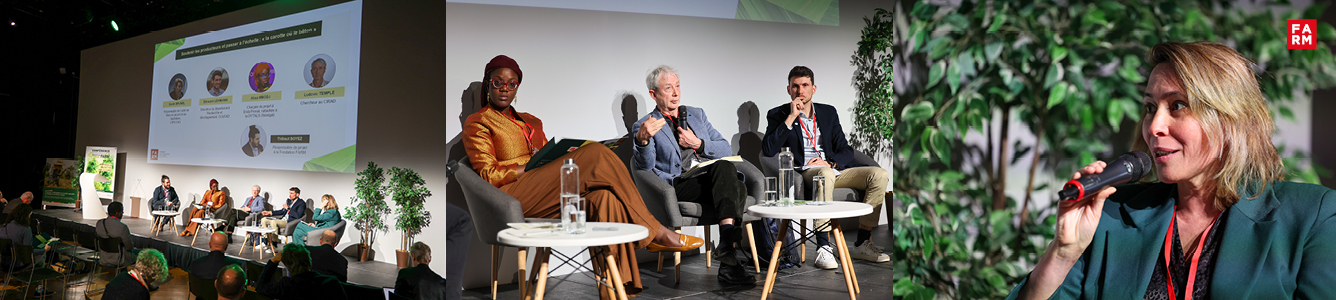
The third session examined the role of regulatory frameworks and public support. Thibaut Soyez, project manager at the FARM Foundation, raised the question of the balance between incentives and constraints. Absa Mbodj, project manager at ENDA Pronat in Senegal, presented the work of DyTAES, a multi-stakeholder platform advocating for a territorial agroecological transition. She warned of the perverse effects of international regulations: if pesticides banned in the Global North are no longer used by private exporters to remain compliant with market demands, They nevertheless manage to penetrate the local informal market., endangering family farms. She noted that «"When there are banned pesticides, there is greater penetration through an illicit market (...) in our countries.".
Édouard Lehmann, Director of the R&D department at COLEAD, described the increasing complexity of European regulations. He stressed that the technical toolbox of farmers in the Global South is emptying faster than it is filling up, with 32 substances withdrawn for only 8 new ones approved between 2022 and 2024. He also pointed to the proliferation of private standards from large retailers which add a layer of complexity without necessarily offering producers a price premium.
Ludovic Temple, a researcher at CIRAD, provided a critical analysis of the direction of public support for agriculture. He denounced a «"structural opacity"» where pesticide subsidies are often diluted under the generic term "inputs." He revealed that Pesticide prices have fallen by 40% in real terms since the 1990s. due to favorable tax policies (elimination of VAT, reduction of customs duties). His argument is radical: «"Let's reinstate a tax system that is unfavorable to synthetic pesticides in order to create a bridge with (...) the funding needs of agroecology."». He suggests investing these resources in infrastructure such as epidemiological surveillance or the revision of vocational training and counseling programs.
Gérard De La Paix Bayiha, for his part, highlighted the «"hidden costs"» of the intensive use of pesticides in Cameroon. The researcher's study reveals that the VAT exemption on pesticides costs approximately 15 billion CFA francs per year to the government, funds which, according to him, could be reallocated to agricultural development. He emphasizes the difficulty of quantifying the health impacts but insists on the need for a One Health approach to reintegrate plant health into the public debate. Christian Huyghe also echoed this sentiment, reiterating that plant health must be considered as a «common good», requiring to think collectively but also to act individually.
Sarah Brunel, representing the International Plant Protection Convention (IPPC) at the FAO, argued for a «"Harmonious multilateralism". She explained that the IPPC helps Member States take ownership of their plant protection legislation so that it is not imposed upon them but becomes a lever for accessing the global market. She cited the example of the ePhyto solution, a digital certificate that reduces fraud and costs, thus freeing up resources to finance the transition. She added that there is no need to favor incentives over regulation or vice versa; the two are complementary. Thibaut Soyez summarizes: «"So on one side, the law to protect, on the other side, market access to incentivize.". Sarah Brunel confirms and continues: «"The carrot would be the benefit of international trade through market access and the dividends that would increase through the actions of the producer and the entire production chain via a natural market access mechanism."» Kaoutar Tachfine, from the Moroccan Agricultural Estates, also pointed out that the fruit and vegetable producing company is transforming the tightening of European regulations into a form of opportunity to innovate. While this encourages the organization to anticipate and find solutions, she emphasized that without «" carrot "» Economic or budgetary constraints and public support threaten the competitiveness of the sectors.
A democratic challenge: restoring trust in science
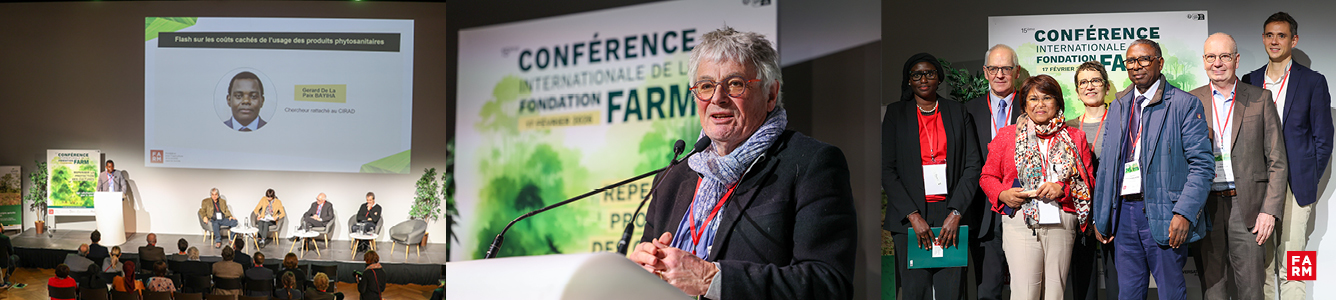
In conclusion to the day, Michel Eddi, Vice-President of the FARM Foundation, reiterated that the pressure on the health sector will continue to increase with climate change and that it is important to maintain the course of reducing the use of plant protection products. He reaffirmed the central role of science: «Trust in science (…) is absolutely essential. It is this trust that leads us to effectively distinguish between opinions and facts.».
Michel Eddi emphasized that agroecological practices are not simply technical alternatives but a comprehensive redesign aimed at utilizing ecosystem services. He called for a rethinking of public policies to promote interactions between agricultural and food policies, in order to guarantee a «"fair price"» to producers. He also supported the idea of territorial policies to manage plant health as a common good.
The Vice President concluded on a hopeful note, inviting everyone to to move from the terrain of ideological conflict to that of pragmatism and listening. He reaffirmed FARM's ambition: «"to offer spaces where the conditions for this necessary public debate, based on respect and listening, are fully met.".

