2026 Barometer of African Agriculture: Fertilizers
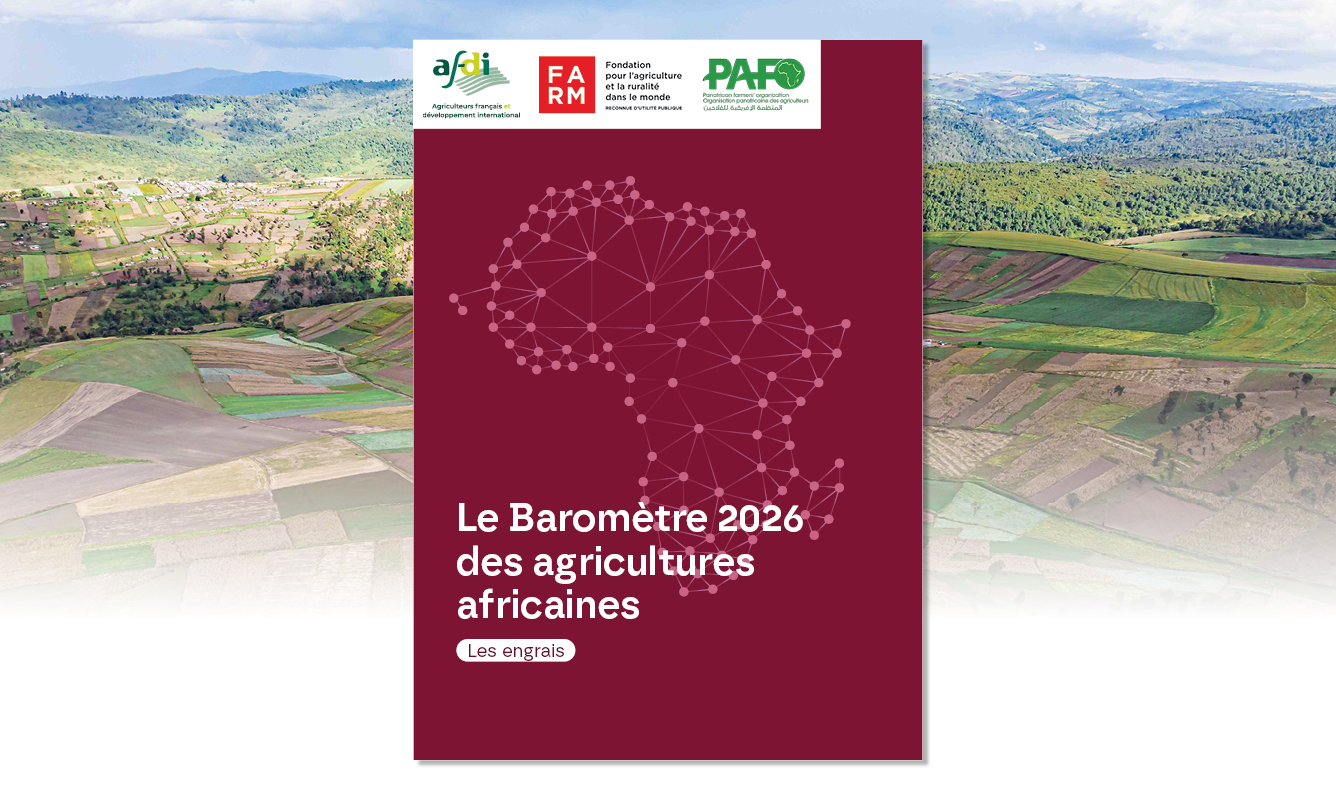
The FARM Foundation, in partnership with Afdi (French Farmers and International Development) and the Pan-African Farmers' Organization (PAFO), publishes the second edition of the African Agriculture Barometer, dedicated to fertilizers.
After a first edition dedicated to the dairy sector in 2025, this strategic tool for analysis, dialogue and decision support offers a documented reading of the dynamics of production, trade, consumption, investment and public policies related to fertilizers in Africa.
What issues does it address? 🧭 Barometer of African agriculture?
Health, geopolitical and climate crises Recent events have highlighted the vulnerability of global food systems and reignited debates surrounding food sovereignty. The fertilizer price shock of 2025-2026, linked to tensions around the Strait of Hormuz, is a further illustration of this.
Faced with this observation, Representative organizations of African producers have expressed a critical need:
- access to reliable, up-to-date and comparable data,
- to guide their strategy and influence local agricultural policies.
Designed with and for these organizations, The African Agriculture Barometer aims to cover several sectors across the continent. It addresses the Sustainable Development Goals (SDGs 1, 2, 8, 9, 12 and 13), in line with the African Union's Agenda 2063.
Following the dairy value chain in 2025, This second edition focuses on fertilizers.
An online platform dedicated to the dairy and fertilizer sectors will soon be available as open source.
Who is the Barometer aimed at?
It relies on robust data and cross-analyses to inform the choices of three audiences:
- Peasant organizations They draw on solid evidence and comparable data to support their arguments.
- Public institutions and decision-makers They find a factual basis for calibrating public policies (subsidies, regulation, investments).
- Economic actors rely on its mapping of dependencies and opportunities to move towards sustainable co-investments, built with local actors.
Technical and financial partners, researchers and media They also contain reference data on African agriculture.
After the dairy value chain in 2025, the Barometer is now focusing on one of the foundations of agricultural production: fertilizers.
Through six themes of analysis and public data from the FAO and IFDC, this edition scrutinizes the fertilizer sector in 54 African countries.
Fertilizers highlight three issues:
- extensively degraded soils;
- a structural dependence on global markets;
- the gap between booming African production and farmers who are still under-supplied.
The subject may seem technical, but the issue is eminently political: No food sovereignty can be built on depleted soils.
This second edition also aims to be a call to action : to make soil fertility a lever for food sovereignty, resilience and prosperity for the African continent.
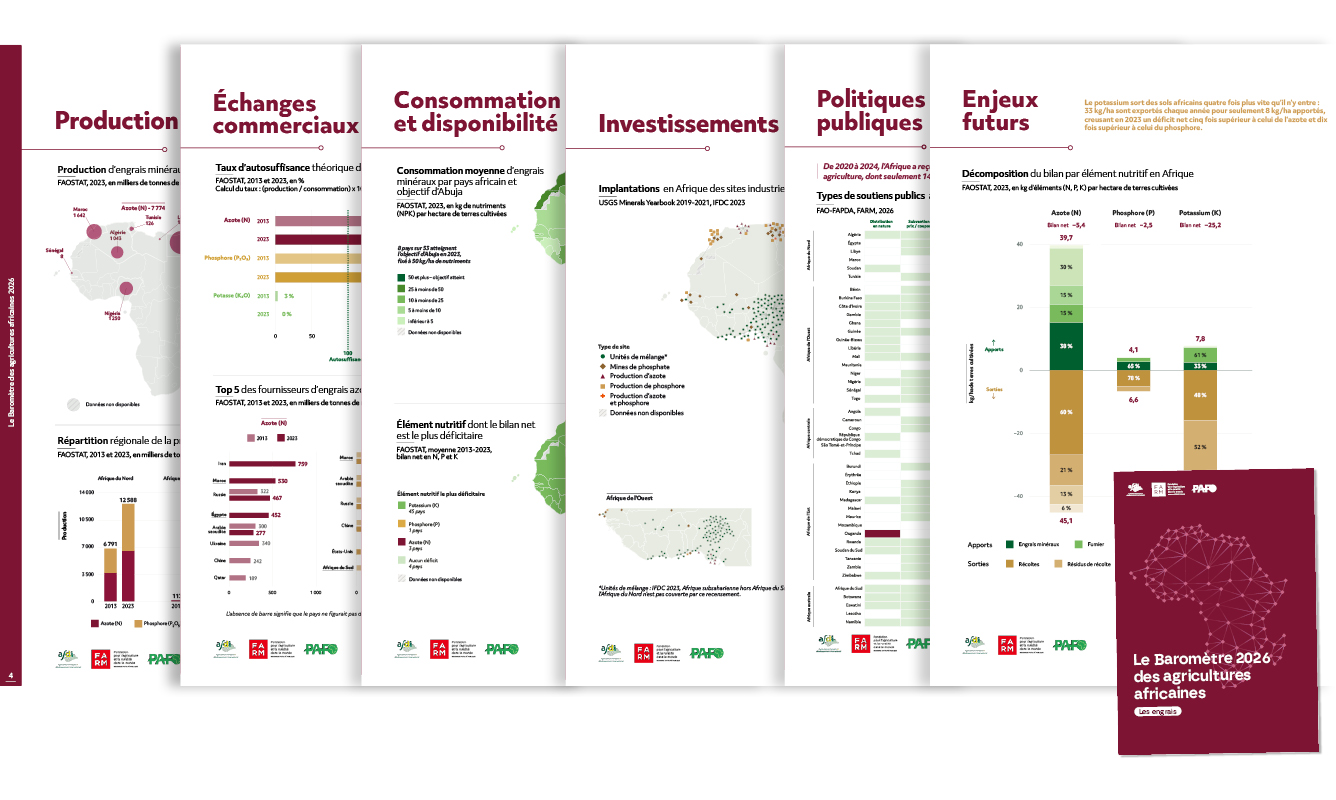
- x 2 African nitrogen and phosphorus production almost doubled between 2013 and 2023
- More than 80% Mineral fertilizers produced in Africa are exported, with Brazil as the primary destination.
- $5.8 billion : the continent's trade surplus on fertilizers in 2023.
- 24 out of 53 countries apply less than 10 kg of fertilizer per hectare per year, compared to 135 kg on average worldwide.
- 8 countries only achieve the target of 50 kg/ha set in Abuja in 2006.
- 45 out of 53 countries have potassium as their most deficient nutrient.
- 4 times : potassium leaves African soils four times faster than it enters them.
- 0 : no potash deposits are being mined on the continent.
- 65 % African arable land is being degraded.
- +45 % : the additional cost that transport and storage can add to the price of fertilizer in a landlocked African country.
- 46 out of 54 African countries They regulate the fertilizer market through prices, distribution, credit, and taxation.
- 3,5 % only agricultural ODA is dedicated to soil health in Africa.
🎬 Testimonials and shared perspectives
" The subject may seem technical; the issue is eminently political. No food sovereignty can be built on depleted soils.. »
" Restoring the fertility of African soils is a task that will take decades. We who work the land know this: soil nourished today is a harvest guaranteed tomorrow.. »
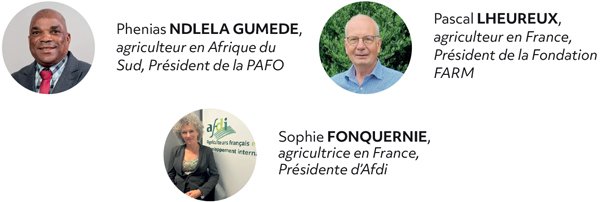
— Editorial from the 2026 Barometer, co-signed by: Phenias Ndlela Gumede, farmer in South Africa and President of PAFO; Pascal Lheureux, farmer in France and President of the FARM Foundation; Sophie Fonquernie, farmer in France and President of Afdi.
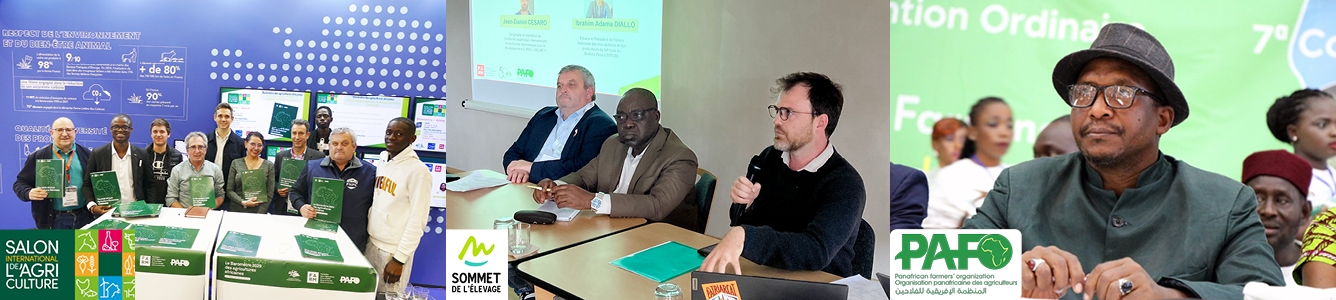
🎤 Invite the Barometer's partners to your events!
The Barometer's partners travel to present and discuss its findings at your conferences, roundtables, webinars, or institutional meetings., in French as well as in English.
Some topics for intervention:
(Increased production, exports, intra-African trade: one of the central findings of the Barometer)
(imbalance of inputs, lack of local production, Abuja objective)
(Import dependency, price volatility, the Strait of Hormuz and public policy responses)
(Industrial capacity, blending units, regional trade and domestic markets)
Also share the report, available in French and English., within your networks to foster discussions on the future of agriculture and food in Africa.
Contact us!
To contribute to the tool:
- Thibaut Soyez, project manager (thibaut.soyez@fondation-farm.org)
For public intervention or partnership:
- Virginie Percevaux, Director of Sponsorship, Communication and Partnerships (virginie.percevaux@fondation-farm.org)

