It is urgent to act collectively to transform crop protection practices
Paris, February 18, 2026 — At its 15th International Conference, the FARM Foundation called for a rethinking of crop protection practices worldwide. The challenge is to move towards greater sustainability while achieving food security objectives, particularly in tropical sectors. To reconcile productivity and sustainability, producers—at the heart of the transition—must be supported by their supply chains, public and private stakeholders, and ultimately, consumers. Everyone has a key role to play: some are already successfully committed to this approach.
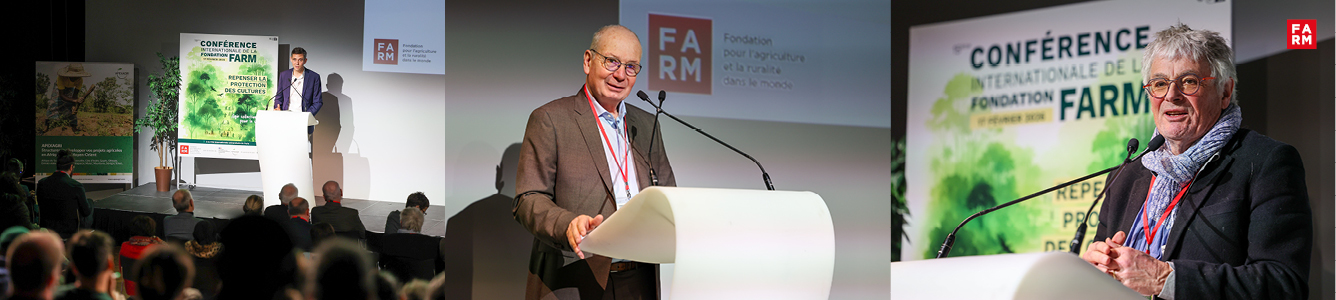
The speakers emphasized the critical need to protect crops against diseases and pests that affect yields, particularly in developing countries. In some regions of the world where the population continues to grow, it is essential to guarantee food security for populations and the incomes of producers. Protecting crops must not come at the expense of the sustainability of production tools, human health, or the environment. Crop protection is central to the One Health approach, which considers human, animal, plant, and ecosystem health as interdependent. Choices regarding plant protection and preventative measures directly influence these different dimensions. The FARM Foundation is actively contributing to enriching the public debate and fostering discussions on a key issue for the French government, which is organizing the One Health international summit in Lyon on April 7, 2026.
Protecting crops to preserve yields
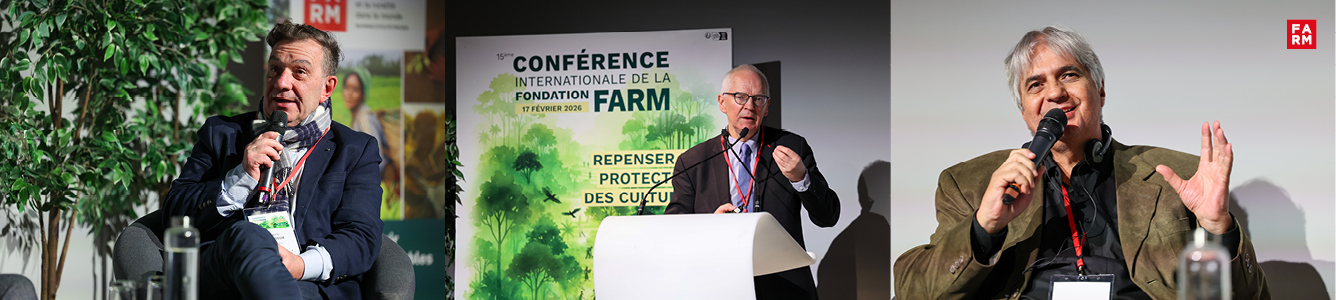
Every year in developing countries, in sectors essential to the economy and food security such as rice, market gardening, and cocoa, agricultural losses due to diseases and pests are colossal. They represent 40 % of global agricultural production in 2021 according to the FAO (1). "« In Africa, these losses reach $65 billion each year. »" recalled Matthieu Brun, scientific director of the FARM Foundation.
Pierre Monteux, director of the Union of Banana Producers' Groups of Guadeloupe and Martinique (UGPBAN), testifies:« Dessert banana production in the French West Indies has fallen from 319,000 tons in 2014 to 190,000 tons today. The cause: cercospora leaf spot, a fungus that attacks the fruit's leaves and reduces banana yields. Without an effective treatment, production has dropped from 40 to 30 tons per hectare, with significant economic consequences. ".
" Protecting crops is therefore not an option, it is an obligation to guarantee safe and sustainable food production, affordable for all, contributing to the economic performance of farmers and all actors in the supply chains. »" recalled Christian Huyghe, president of the scientific council of FARM and Décio Karam, researcher at EMBRAPA, a Brazilian state company specializing in agronomy.
In both the North and the South, the use of pesticides – when producers have access to them – has long been the only way to address these health risks. Effective and often inexpensive, their use has increased between the 1990s and 2022 (2) This is notably, though heterogeneously, the case in South and Central America, Africa and Oceania (between 40 and 120 %) and to a lesser extent in Asia, North America and Europe. Pesticides generate risks, particularly for substances recognized as problematic in international conventions: health impacts on farmers and populations, environmental risks, and the emergence of resistance.
Social and environmental costs are often underestimated in traditional economic analyses. The availability of these solutions can vary from country to country and may even decrease further due to the withdrawal of older molecules, the emergence of resistance to active substances, and research costs. It is therefore crucial to reconfigure crop protection systems to make them more sustainable through a multi-faceted approach, combining agroecological practices, biological, technological, and digital solutions. According to Ahmed Abu Zahra, Head of Crop Portfolio and Third-Party Partnerships for Africa and the Middle East at BASF,« The approach today in Africa is to bring the latest digital technologies and treatment advice to ensure the most accurate dosage and treatment at the most favorable times.‘.
The essential search for alternatives to conventional crop protection
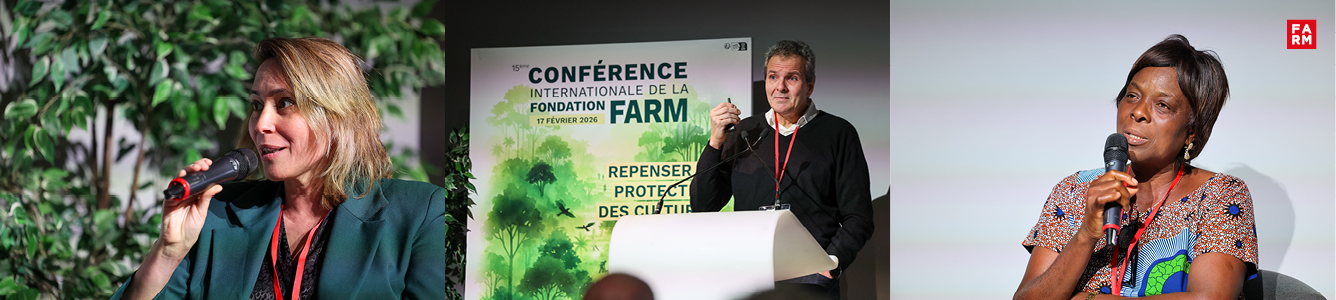
Rethinking crop protection involves "« Prevention is better than cure »As Sarah Brunel of the International Plant Protection Convention (FAO) pointed out, limiting the spread of diseases and pests, particularly through trade standards or technical support for countries, also involves prophylaxis, meaning all the measures taken to prevent diseases, using monitoring and decision-support tools. Sarah Brunel continued:« It is essential that producers do not passively accept but actively embrace new crop protection practices, which offer opportunities to access international markets… and to better protect their
territory. »
The work of the PRETAG (Pesticides Reduction for Tropical Agriculture) initiative, presented by CIRAD researcher Denis Loeillet, shows that there are practices that can be implemented throughout the entire crop cycle. For the researcher, the paradigm "« One problem = one solution »" is outdated, given the increasing number of health crises and societal expectations. From soil cultivation to the use of biopesticides, including genetically resistant plants, biological control, the use of microbiota or olfactory signals… there are a large number of technical levers. To ensure their effectiveness, they sometimes need to be used in a complementary way, by combining them, with an integrated approach. This will inevitably be more complex in terms of the skills required, logistics, and costs. Reducing fungicide use in banana agro-ecosystems mobilizes up to 10 types of levers. But it is also necessary to consider the conditions of the transitions in terms of costs, risk compensation, political levers, and socio-technical barriers. Shared responsibility among all actors in the supply chains is an essential step but too often overlooked within these sectors."« Protecting crops is therefore everyone's business: a common good to be safeguarded for society. »" emphasized Pascal Lheureux, farmer and president of the FARM Foundation.
The transition is possible provided it is driven collectively.
These transformations require a high level of cooperation and coordination among all actors in food systems. According to Véronique Dansou, coordinator of the FAR Togo network:« If the producer is at the heart of the process, it is imperative that they be supported, accompanied and trained as closely as possible to their needs in order to allow an equitable sharing of the risk inherent in the transition. »As Clément Rigal, Secretary General of the ECOFFEE consortium, pointed out,« The mere existence of technical solutions is an essential but insufficient condition. Producers must have access to these solutions (training, advice), and the market conditions that allow them to be compensated must be in place. Therefore, an entire ecosystem must be organized: insurance companies, banks, training providers, downstream businesses, etc., to make the adoption of these sustainable crop protection practices possible. »"Multi-stakeholder platforms such as ECOFEE R&D for coffee, the French Initiative for a Sustainable Banana (IFBD) or its equivalents in other sectors, are encouraging signs of the mobilization of all stakeholders.
The central role of public policies: between incentives and regulation
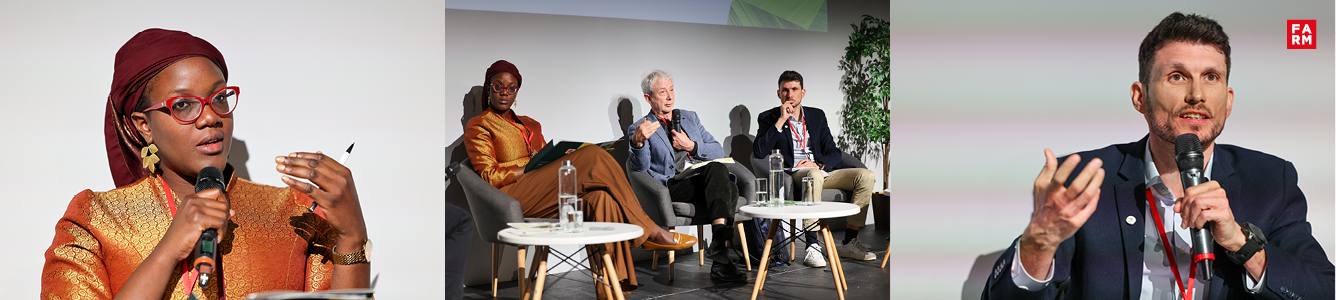
Public policies and regulations play a central role, particularly financial incentives during the transition to facilitate market access for new solutions.« Regulatory frameworks can become drivers of change, provided they are combined with appropriate support measures and a shared vision of the transition. »" stressed Absa Mbodj, head of natural resource management at Enda Pronat in Senegal.
An idea supported by Edouard Lehmann, director of the research and development department of COLEAD, an association of the European Commission that supports exporters from developing countries:« At the public policy level, adapting regulatory frameworks is crucial to effectively and sustainably support the transition to more sustainable protection systems.
The role of large retailers in supporting sectors in transition was highlighted several times during the international conference:« Large distributors can help to better distribute the value chain“Edouard Lehmann reminded us. But it is also at this level that the pressure on the price is enormous.“"In 20 years, the price of a kilo of bananas has lost 1/3 of its value in constant euros."» Denis Loeillet, a researcher at CIRAD, pointed out this interesting fact, which can be compared (for example) to the loss of production of this fruit in Martinique and Guadeloupe due to diseases and pests: from 40 to 30 tonnes per hectare in less than 15 years.
The FARM Foundation
For 20 years, The Foundation for Agriculture and Rurality in the World (FARM), recognized as a public utility, works to promote sustainable agriculture in the world and in particular in the countries of the South.
Through its studies, partnerships and awareness campaigns, FARM informs public and private stakeholders about the paths to take for balanced agricultural development that addresses economic, social and environmental issues.
Press contacts
Marie-Laure Hustache: 06 69 25 04 42 – lagencedemarielaure@gmail.com
Vincent Manesse: 06 87 76 76 74 – vince.manesse@gmail.com
(1) https://www.agenceecofin.com/agro/0406-88852-40-de-la-production-agricole-mondiale-est-perdue-en-raison-des-especesnuisibles-fao
(2) https://openknowledge.fao.org/items/262b96c8-eef0-4810-9c23-d8639a5dbf1b