Governing pesticides globally: an imperative still out of reach
From European fields to the plains of Africa, Asia, and Latin America, pesticides circulate at the pace of globalized trade, while the health and environmental risks remain very unevenly distributed. Behind each molecule lies a global governance structure, made up of international conventions, voluntary codes, and private standards, where power dynamics play out between states, companies, and producers.
Between historical legacies, fragmented international frameworks, divergent classifications, and unequal control capacities, managing the use of substances whose impacts extend far beyond the territories where they are applied proves to be a shared challenge. This article offers a pedagogical perspective on this complex framework and its limitations.
Why talk about global governance of pesticides?
Long considered a purely technical issue – choosing the right molecule, at the right time, on the right crop – pesticides are now at the heart of governance challenges that extend far beyond the field of agronomy. Their production, marketing, and uses involve trade-offs between food security, public health, biodiversity protection, and the competitiveness of agricultural sectors, within a context of significant power imbalances between countries, companies, and producers.
Their market is deeply globalized, structured not only around classic North-South flows dominated by European or North American firms. Other emerging countries, such as China, have become major players in pesticide manufacturing and export, particularly to countries in the Global South, where demand growth is strongest. Products thus circulate within a complex network of South-South and South-North value chains, while in many developing countries, access to inputs is presented as a prerequisite for modernizing agriculture and meeting urban demand in particular. However, the systems for regulating, monitoring, and supporting pesticide use remain fragile in these countries.
In this context, discussing the “global governance” of pesticides means examining all the rules—both binding and voluntary—and the actors who influence how these products are manufactured, marketed, used, and ultimately, how their costs and benefits are distributed. It also raises questions of coherence and shared responsibility: how to manage risks in a system where production and export centers are shifting toward the Global South, especially when many importing countries have limited resources to assess hazards, train users, and monitor health and environmental impacts.
For an institution like the FARM Foundation, which places the building of sustainable and equitable food systems at the heart of its mission, this governance perspective is crucial. It allows the debate on pesticides to be linked to the major transitions underway – agroecology, adaptation to climate change, transformation of supply chains – by revealing, beyond the figures and the molecules, the reshaping of power relations between North and South, but also between countries of the Global South.
Listing without mastering: binding international frameworks that are still too fragmented
Global pesticide governance is based first and foremost on a foundation of international conventions that regulate the most dangerous substances, supplemented by a set of codes of conduct and often voluntary standards that guide the practices of states and private actors.
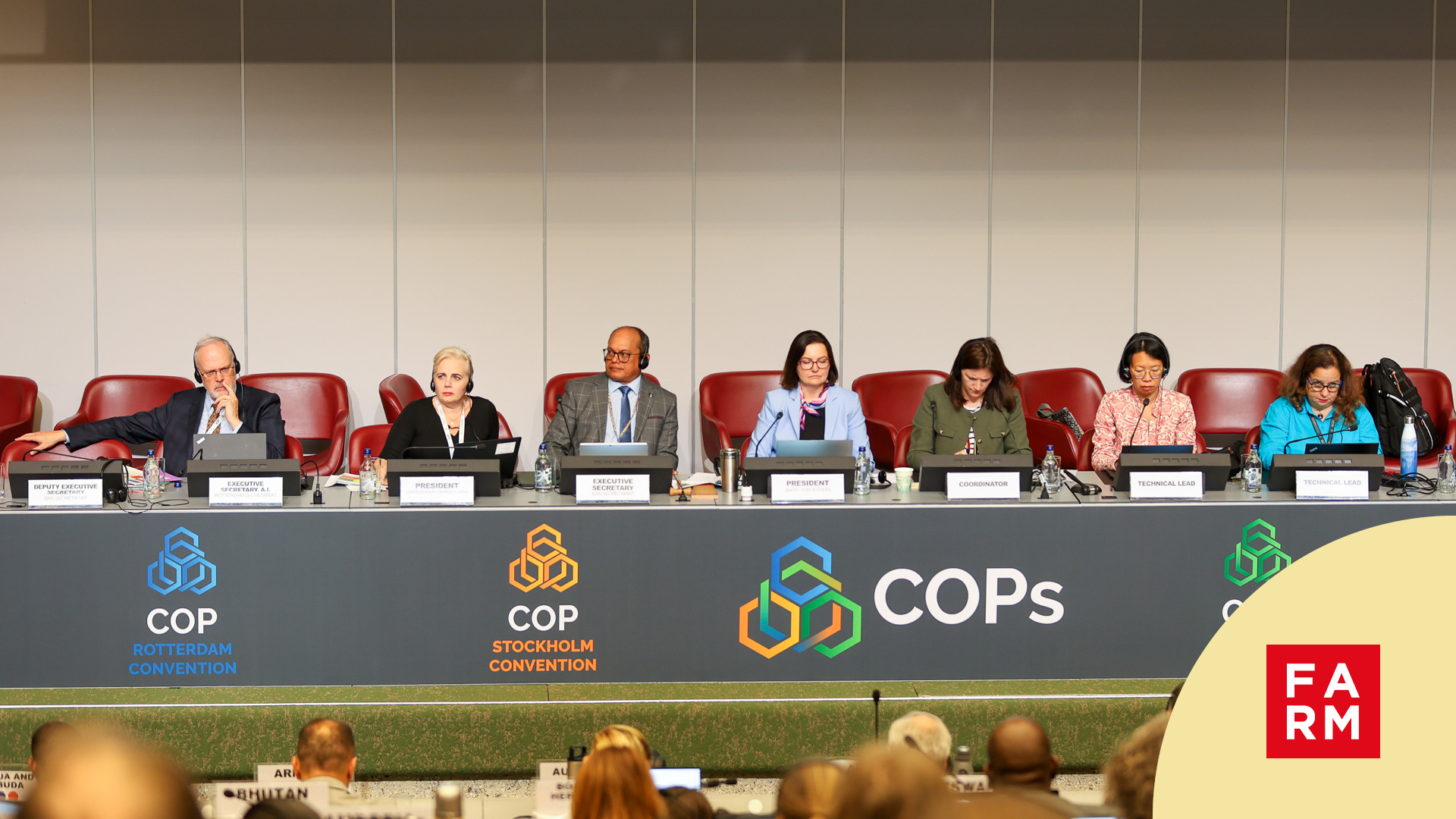
Two multilateral agreements occupy a central place: the Convention of Rotterdam, which imposes a prior consent procedure on the importer for the trade of certain chemicals, and the Convention of Stockholm, which aims to eliminate the production of persistent organic pollutants.
While these two binding legal instruments establish a common minimum framework for information, transparency, and the prohibition of molecules posing major risks, their scope remains limited: participation is voluntary, obligations are weak, and the lists covered represent only a fraction of the problematic pesticides used in agriculture worldwide. Furthermore, the two conventions could be complementary but only partially overlap, illustrating the fragmentation of international governance.
Furthermore, the registration of new products is a slow process and involves complex negotiations. It is also worth noting the existence of a third agreement, the Basel Convention, which governs the transboundary movement of hazardous waste, particularly obsolete stockpiles of pesticides; we will not elaborate on this convention here. Let us instead examine more closely the Rotterdam and Stockholm Conventions.
Rotterdam Convention:
The Rotterdam Convention (1998, entered into force in 2004) regulates the international trade of certain hazardous chemicals and pesticides by imposing a prior informed consent procedure between exporting and importing countries. This means that to export products from this list, the exporting country must provide all toxicological information about the product to the importer, who will then make an informed decision on whether to accept or reject it.
Among the chemicals listed in Annex III The Rotterdam Convention includes pesticides and industrial chemicals that have been banned or strictly regulated by at least two Parties for health or environmental reasons and for which the Conference of the Parties has decided to include them in the PIC procedure (a procedure which obliges the exporter to provide toxicological information to the importing country).
A total of 57 chemicals are listed in Annex III, including 38 pesticides intended for plant production (including 4 extremely dangerous pesticide preparations), 18 products for industrial use, and 1 chemical product both in the pesticide category and in the product for industrial use category.
Stockholm Convention:
The Stockholm Convention (2001, entered into force in 2004) aims to protect human health and the environment by eliminating or reducing persistent organic pollutants (POPs), toxic chemical substances that accumulate in ecosystems and living organisms.
Annex A The Stockholm Convention now includes 39 persistent organic pollutants (POPs) whose production and use must be eliminated., including 23 pesticides[1].
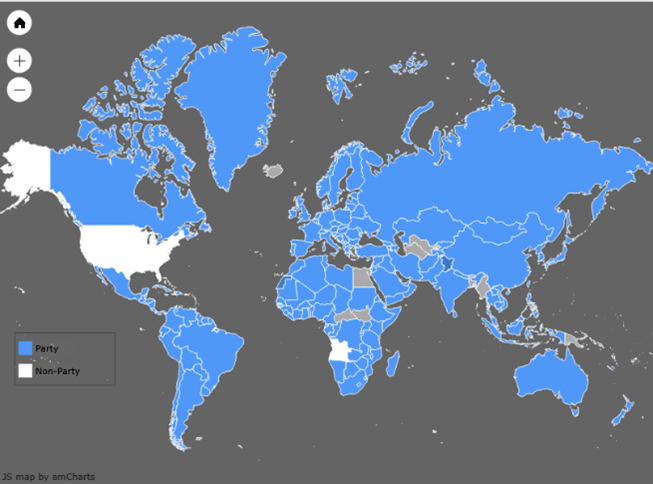
| Countries that have signed the Rotterdam Convention in 2026 |
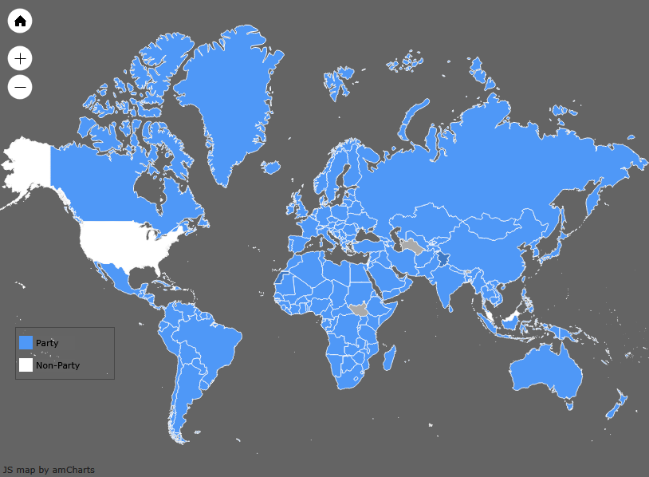
| Countries that have signed the Stockholm Convention in 2026 |
These two conventions are the most concrete example of a desire to harmonize the assessment of problematic substances on an international scale.. However, several points need to be highlighted:
- States sign and ratify these conventions on a strictly voluntary basis and are not subject to any obligation (other than diplomatic ones) regarding their implementation. As the two maps presented indicate, the United States is not a signatory to these conventions, even though it is among the world's leading producers, users, and exporters of pesticides. This contradiction, which we will analyze in a future publication, alone illustrates the limitations of international commitment to regulating hazardous substances.
- To realize the very limited nature of the lists established by these two conventions (38 pesticides in the Rotterdam list and 23 in the Stockholm list), one only needs to compare them with the situation within the European Union. In the EU, where substances are assessed by EFSA and then approved or banned by the European Commission, 1,473 pesticides are currently listed: 977 are banned, 75 are still under evaluation, and 421 remain authorized.
Thus, these two conventions at least have the merit of translating a near-collective awakening. Indeed, the pesticides listed in these annexes result from a diplomatic negotiation process long and complex, where scientific evaluation sometimes clashes with the economic and political interests of the signatory states. Their inclusion testifies less to an exhaustive inventory than to a hard-won international compromise.
These conventions also reiterate that, in principle, Each state remains fully sovereign in its decisions., and that the actual effectiveness of these frameworks largely depends on the technical, human, and financial capacities that countries have to control what enters or circulates within their territory. In some regions of the world, these resources remain limited, which complicates the application of the procedures in place and undermines the very ambition of these international mechanisms.
Voluntary standards and codes of good conduct to engage governments and stakeholders in the supply chains
The International Code of Conduct for Pesticide Management
Alongside this "hard law", the "« soft law »plays a central role in the global governance of pesticides, complementing the conventions described above. At the forefront is the International Code of Conduct for Pesticide Management, developed by the FAO and WHO, which constitutes the most comprehensive normative reference to guide the actions of governments, industry, distributors and users.
This voluntary Code sets out principles for product registration, labeling, distribution, waste management, applicator training, and the promotion of integrated pest management. It serves as the basis for numerous technical assistance programs for developing countries to revise their laws, establish national registries, strengthen approval and inspection systems, and develop poisoning surveillance systems.
Developing countries/high-risk populations: a list for action
Pesticides considered extremely dangerous (PED or Highly Hazardous Pesticides HHPs) are often presented as the most concrete translation of the ambitions of the International Code of Conduct on Pesticide Management. The PED category makes it possible to prioritize the targeting of molecules that pose the highest acute or chronic risks according to internationally harmonized criteria. In October 2008, the joint FAO/WHO meeting on pesticide management (JMPM) defines as PED any product exhibiting one or more of the following characteristics:
- Pesticide formulations or preparations that meet the criteria of classes ia or ib of the WHO classification the danger of pesticides, or,
- Active ingredients of pesticides and their preparations that meet the criteria of carcinogenicity, categories 1A and 1B, of the Globally Harmonized System of Classification and Labelling of Chemicals (GHS), or,
- Active ingredients of pesticides and their preparations that meet the criteria of mutagenicity, categories 1A and 1B, of the Globally Harmonized System of Classification and Labelling of Chemicals (GHS), or,
- Active ingredients of pesticides and their preparations that meet the criteria of reproductive toxicity, categories 1A and 1B, of the Globally Harmonized System of Classification and Labelling of Chemicals (GHS), or,
- Active ingredients of pesticides cited in Annexes A and B of the Stockholm Convention and those that meet all the criteria of paragraph 1 of Annex D to the Convention, or,
- Active ingredients of pesticides and their preparations cited in Annex III of the Rotterdam Convention, Or,
- Pesticides listed under the Montreal Protocol, or,
- Active ingredients of pesticides and their preparations that have shown a serious or irreversible incidence of adverse effects on human health or the environment.
The FAO/WHO guidelines on developing countries describe an operational process for identifying, assessing, mitigating, and even banning certain substances. These voluntary standards are key because they allow countries, particularly in the Global South, to compile lists of their hazardous and potentially harmful substances (HHPs), measure the actual risks under their conditions of use, and develop action plans to promote alternatives, including agroecological ones.
Private standards—sector standards, certification frameworks, and specifications from international buyers—add an extra layer of regulation, sometimes more ambitious than public requirements, particularly regarding lists of authorized substances or residue limits. While these standards can raise the bar for certain practices and open up profitable markets, they remain unequally accessible to small-scale producers in the Global South and can create new forms of exclusion for those who lack the technical resources or support necessary to comply, or when national regulatory developments cannot keep pace.
The PAN and its lists: tools but not a standard
This is precisely the objective of the lists developed by the Pesticide Action Network (PAN), which are then used by labels (cotton, fruits and vegetables, etc.) or in the specifications of downstream actors. The Pesticide Action Network (PAN) is an international network founded in 1982 in Penang, Malaysia, which brings together more than 600 organizations in over 90 countries.
For over forty years, PAN has worked to reduce the use of hazardous pesticides and promote ecological and socially just agricultural alternatives. PAN conducts international campaigns, publishes lists of highly hazardous pesticides, supports risk reduction policies, and assists peasant and citizen movements in the transition to safer agricultural practices.
This network is now one of the major players in the global movement against toxic substances. The PAN notably publishes two lists of interest (the latest versions are from 2024). The first lists by country all banned pesticides.
This list includes 168 countries that define their own criteria and make the data available. It should be noted that so-called "obsolete" pesticides (molecules that are no longer in use and are no longer marketed) are not included in this list.
In parallel with this annual census, the PAN uses the FAO and WHO HHP classification to produce a second list of pesticides considered extremely dangerous, by adding further criteria such as endocrine-disrupting properties, which are absent from the official FAO and WHO classifications. In 2024, the PAN list includes more than 358 active substances. To give an idea of the scale, The European Union, even though it is the region of the world with the strictest pesticide regulations, only bans 60 of the developing countries listed by the PAN. (FARM).
State sovereignty as a structural limit to global pesticide governance
To understand the obstacles hindering the emergence of global pesticide governance, it is necessary to first examine risk assessment methods. Several assessment criteria exist, recognized (fully or partially) by states and supranational organizations. These criteria are used to classify pesticides according to their danger to the environment, biodiversity, or human health. Based on this classification, each country then decides whether to authorize or prohibit an active substance, depending on its toxicological profile as well as its own agricultural, economic, or health priorities.
Thus, China's "list" is not the same as that of the United States, which is not the same as that of France, which itself is different from that of the European Union!
In reality, there is no unified global classification of pesticide hazards.. Each state (or group of states) conducts its own assessments, according to its methods, data and interests.
This is why a pesticide can be classified as GHS 1A/1B (1A = proven toxicity; 1B = presumed toxicity) in the European Union and therefore banned, but not be banned in the United States or Brazil. This is the case, for example, with chlorothalonil, which is banned in the EU but not in Brazil.
Since there is no single global classification, international conventions such as Rotterdam or Stockholm must rely on national classifications to decide whether a substance should be restricted or banned.
Similarly, when the PAN, in its list of HHPs, indicates that a pesticide is GHS 1A/1B, this does not mean that all countries have classified it that way. The PAN compiles existing classifications and often adopts the strictest one among those published by official agencies (such as ECHA in Europe, the EPA in the United States, or ANVISA in Brazil).
At this stage of the analysis, it appears that states retain control over their decisions regarding substance bans. Despite the globalization of trade, and even though, as the PAN reminds us, "pesticides do not respect borders," reaching an international consensus remains difficult.
Each country makes its decision based on its own agricultural model, climate, pests and diseases it faces, or the competitive advantages that the use of certain substances can provide, but also based on its technical, regulatory and operational capabilities for control.
It is also worth remembering that not all states share the same "philosophies" regarding precautions to be taken concerning the supposed toxicity of certain pesticides. The EU, for example, applies the precautionary principle (must prove that the product is not toxic) implying a high level of restriction, whereas the United States applies the principle of risk management with strict scientific proof : we are talking about risk assessment (must establish that the use of a pesticide does not cause “unreasonable risks”).
One more element, if one were needed, to realize the divergences that can exist between sovereign nations.
Conclusion: Towards more effective regulation?
Global pesticide regulation remains hampered by heterogeneous regulations, unequal control capacities, and illegal circulation that circumvents national bans, particularly in countries of the Global South.
Faced with these limitations, strengthen national capacities, support alternatives and improve international cooperation become imperatives for the sustainable protection of crops as well as for human health and the environment.
In addition to these constraints, there is a major paradox of international trade that we will address in a future publication: certain regions, including the European Union, continue to export dangerous substances which they have nevertheless banned on their own territory. This asymmetry fuels risky practices and undermines ambitions for collective governance.
The regulation of pesticides will remain an unfinished battle as long as states act alone in the face of risks that unfold globally without respect for borders.
List of abbreviations
| Abbreviations | Definitions |
| ANVISA | National Health Vigilance Agency (Brazilian National Health Surveillance Agency) |
| DDT | Dichloro‑diphenyl‑trichloroethane (organochlorine insecticide) |
| ECHA | European Chemicals Agency (European Chemicals Agency) |
| EFSA | European Food Safety Authority |
| EPA | Environmental Protection Agency (U.S. Environmental Protection Agency) |
| FAO | Food and Agriculture Organization of the United Nations |
| HHP / PED | Highly Hazardous Pesticides Extremely dangerous pesticides |
| SDGs | Sustainable Development Goals (Sustainable Development Goals – SDG) |
| WHO | World Health Organization |
| BANG | Pesticide Action Network (International network of NGOs on pesticides) |
| PEAK | Prior Informed Consent (Prior informed consent procedure – Rotterdam Convention) |
| POP | Persistent organic pollutants |
| SGH 1A | Globally Harmonized System – Acute Toxicity Category 1A = Confirmed |
| SGH 1B | Globally Harmonized System – Acute Toxicity Category 1B = Suspected |
| SGH 2 | Globally Harmonized System – Acute Toxicity Category 2 = Presumed |
[1] The Stockholm Convention has three annexes. Annex A concerns substances whose production and use must be eliminated; Annex B concerns substances whose use is strictly limited to certain exemptions; Annex C concerns the reduction of unintentional industrial discharges.